
Selected design work

The Office of Evaluation Sciences (2021)
Developing evaluations to build evidence for equity action plans at the National Oceanic and Atmospheric Administration
Executive Order 13985, On Advancing Racial Equity and Support for Underserved Communities Through the Federal Government, directed U.S. federal agencies to identify barriers that underserved communities may face in accessing and benefiting from agencies’ policies, programs, and activities.
I led an interdisciplinary team with members from the Office of Evaluation Sciences and the GSA Office of Customer Experience to develop guidance for how the National Oceanic and Atmospheric Administration’s (NOAA) Equity Assessment teams could evaluate their future efforts to promote equitable service delivery. Proposals included a mix of qualitative and quantitative approaches. We met with teams from NOAA to help develop program-specific definitions of equitable service delivery and define what underserved communities (the blanket term used in the Equity Executive Order) meant in the context of their programs.
ClimateDesigners.org (2020)
Helping Designers Dedicate their Skills to Climate Action
When I began searching for design opportunities in climate back in 2019, there were few resources available for designers looking to focus their careers on climate change. Climate career resources didn’t address the role of design in implementing evidence-based solutions. Resources for designers interested in climate change focused almost exclusively on activism. I wrote The Climate Design Guide to fill that gap.
The guide offers a definition of “climate design” that designers from multiple disciplines can identify with, makes the case for design’s role in climate transition, provides an approachable summary of evidence-based climate solutions, and highlights specific sectors and issue areas that designers can get involved in.
The guide is currently hosted on ClimateDesigners.org as a resource for all new members of the climate design community. Since its initial publication, I’ve been invited to speak about the guide as a panelist at the Clarity Conference (2020) and Accenture’s Practice Makes speaker series (2022).
The Policy Lab at Brown University (2020)
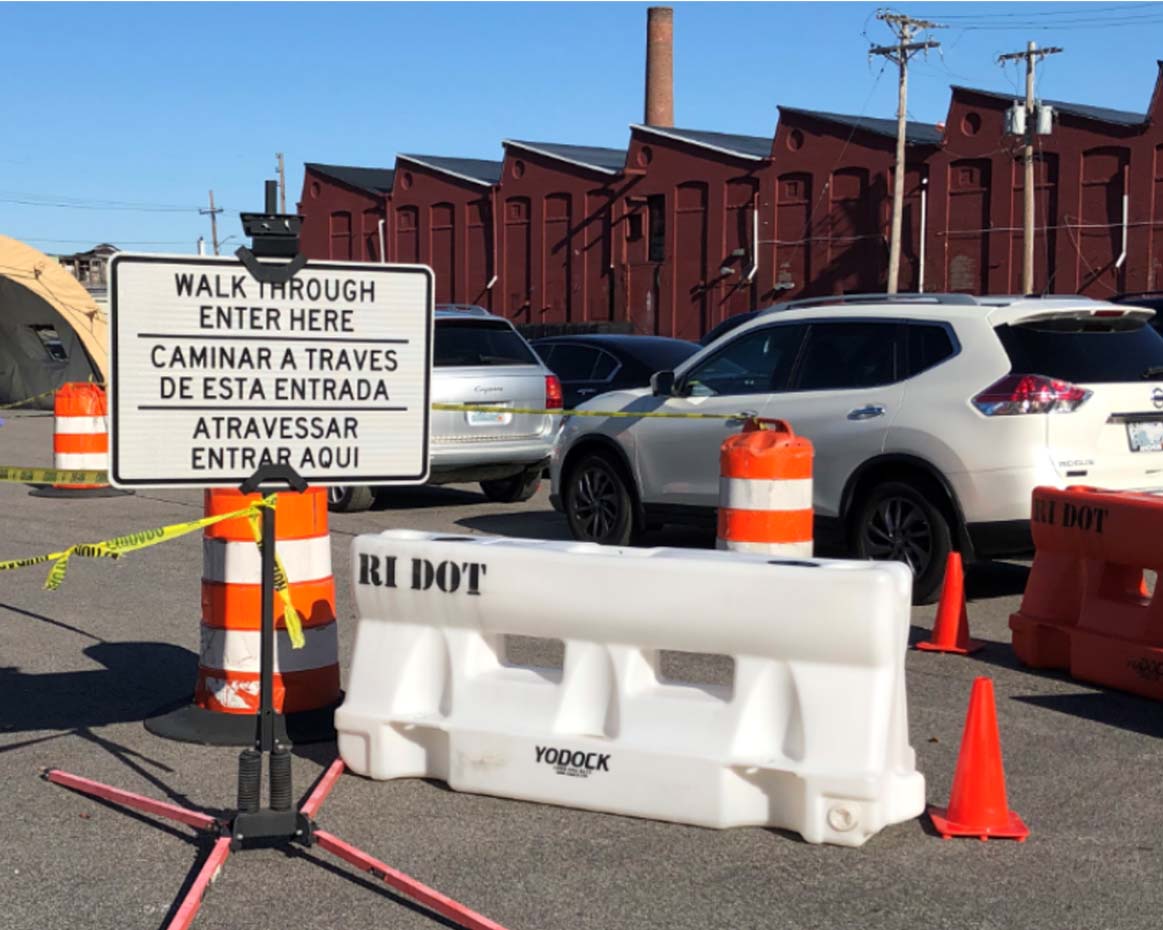
Conducting design research to support the COVID-19 testing experience
The Rhode Island Department of Health (RIDOH) partnered with The Policy Lab at Brown University (TPL) to understand how to improve the Covid-19 testing experience for Rhode Islanders. Along with TPL’s Head of Design, I helped design and implement TPL’s strategies for collecting feedback from residents about their experience scheduling a test, getting tested, and receiving their results. Methods included online surveys, intercept interviews, and follow-up interviews. I led synthesis on the final presentation and recommendations to RIDOH stakeholders.
To set RIDOH up for success with planned public vaccine administration sites, I also developed a set of user research toolkits for RIDOH, including detailed guidance on in-depth follow up interviews, usability testing, existing feedback sources, and intercept interviews, along with ready-to-use outreach materials and moderator guides.
National Bank (2019)
Developing behaviorally-informed strategies to improve financial wellness
Our client wanted to create a financial wellness benefit for employees that promoted not only financial security in retirement, but financial security in the present. This seven-month project involved a literature review on the determinants of financial wellness and prior effective interventions, a nationally representative survey, and 72 audience interviews to understand financial wellness and how we could help people improve it.
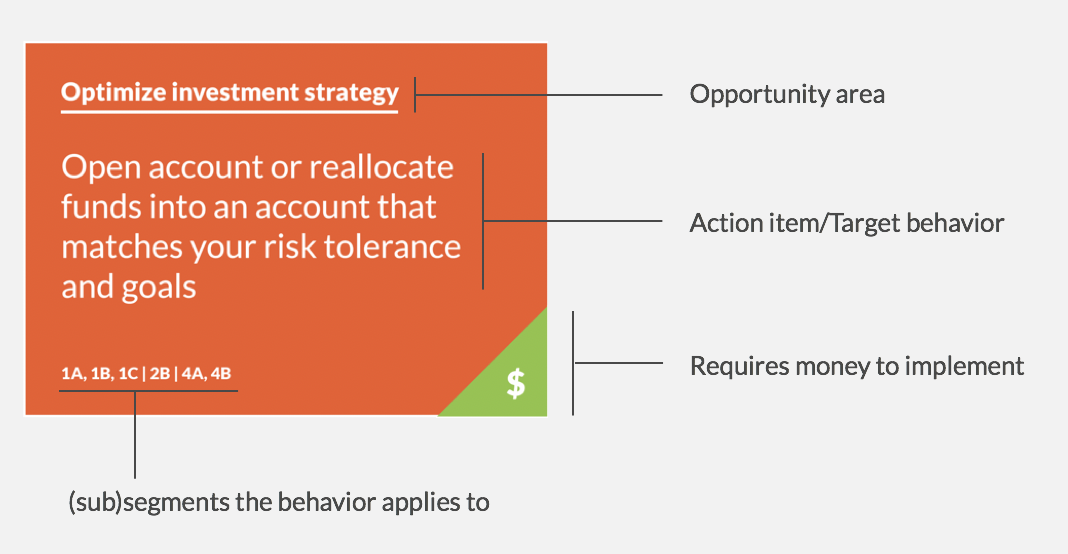
We synthesized these findings into a behaviorally-informed guide that outlines relevant user segments, their needs, and strategies the bank could implement to support employees’ financial wellness.